
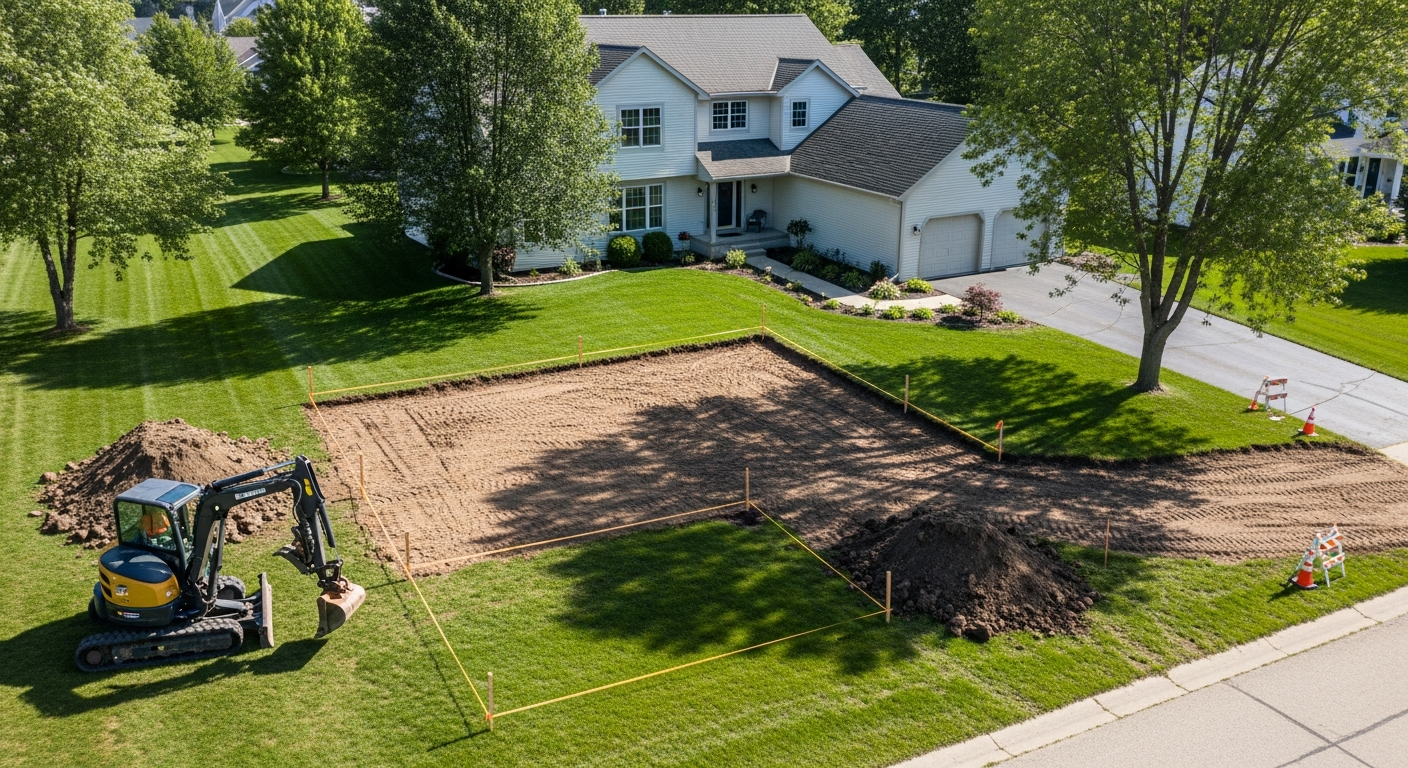
You've scheduled your paving project — congratulations! Whether you're getting a new driveway, patio, sidewalk, or parking area, a little preparation on your end can make a big difference in how smoothly things go. Here's a practical guide to getting your property ready before the crew shows up.
Clear the area completely. Remove all vehicles, bikes, trash cans, basketball hoops, planters, and anything else from the work zone. Our crews need plenty of room to operate heavy equipment like skid steers, pavers, and dump trucks. The more space they have, the more efficiently they can work. If you have a temporary spot to park on the street or at a neighbor's house, plan for that during the project.
Mark or flag anything that needs to be protected. If you have sprinkler heads, landscape lighting, invisible fence wires, or shallow utility lines near the work area, let your contractor know ahead of time. We'll do our best to work around them, but it helps to have them clearly marked with flags or paint. If you're not sure where your underground utilities are, call 811 (Gopher State One Call in Minnesota) at least a few days before work begins — it's free and required by law.
Trim back vegetation. Overhanging branches, bushes, and plants that encroach on the work area should be trimmed back before the crew arrives. This prevents damage to your landscaping and gives the crew clear access. If there are trees with roots growing near the paving area, mention that to your contractor — root barriers or special grading may be needed.
Talk to your neighbors. Paving projects involve heavy equipment, noise, and truck traffic. Giving your neighbors a heads-up is just good courtesy. Let them know which days work is planned and that there may be temporary disruptions to street parking or driveway access. If the project involves work near a shared property line, your contractor should discuss this with you ahead of time.
Plan for curing time. After your new surface is installed, it needs time to cure before you can use it. For concrete, you'll typically need to stay off the surface for at least 7 days and avoid driving on it for 28 days. For asphalt, you can usually walk on it within a day or two, but driving should wait at least 3 to 5 days — longer in hot weather when the asphalt is softer. Plan your parking and daily routine around these timelines.
Make sure there's water access. Concrete work in particular requires water for mixing, curing, and cleanup. Having an accessible outdoor spigot or hose near the work area is helpful. If your home's water supply is in an unusual location, let your contractor know so they can plan accordingly.
At John & Jerry, we walk every customer through the preparation process before work begins. We want you to feel confident and informed at every step. If you have questions about getting ready for your project, request a free estimate or give us a call — we're happy to help.